Leopard Sunflower LGBT Rainbow Design Review
When I first opened the Leopard Sunflower Lgbt Rainbow file set, I felt that immediate spark of possibility. It is not every day that a design manages to blend three distinct visual languages into one cohesive piece. You have the fierce, untamed energy of leopard spots, the warm optimism of a sunflower, and the proud, joyful spectrum of rainbow colors. Together, they create something that feels both celebratory and grounded. As a designer who has spent years testing graphics across different mediums, I could instantly see where this would shine and where it would need a careful hand.
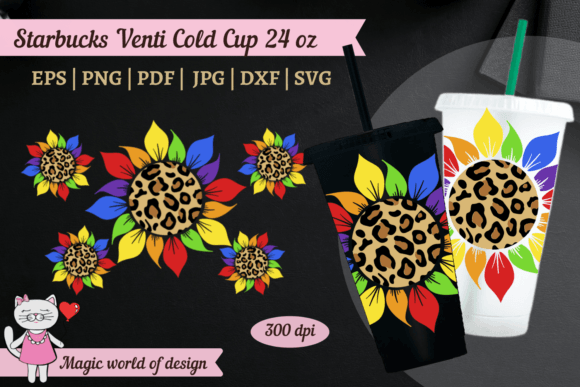
This is a Tumbler Wraps graphic by category, pre-sized for the Venti Cold Cup 24 oz. The instant download bundle includes SVG, PNG, EPS, DXF, and PDF formats. For crafters who work primarily with cutting machines, that variety is a genuine time-saver. But I wanted to look deeper. Many of my readers ask me whether a digital design file can cross over into machine embroidery design territory. The answer is rarely a simple yes or no. It depends on the artwork itself, the stitch conversion process, and the final product you are aiming for.
First Glance at the Composition
The Leopard Sunflower Lgbt Rainbow graphic has a centered, balanced layout. The sunflower sits like a sunburst, with petals radiating outward, while leopard print patterns weave through or around the floral elements. The rainbow accents are integrated thoughtfully, not slapped on as an afterthought. This matters because when you convert a Graphics file into an embroidery file, balanced compositions stitch more cleanly. There is less pull distortion, and the final finished product looks intentional rather than chaotic.
What struck me most was the emotional tone. It feels like a pride celebration meets nature, a quiet confidence rather than a loud shout. I could instantly picture this on a handmade tote bag carried at a summer market, or stitched onto a denim jacket for someone who wants their apparel to tell a story without saying a single word.
Real-World Embroidery Potential
Let me walk you through a real scenario. Last week, I was preparing a batch of custom embroidered sweatshirts for a small boutique client. She wanted designs that felt personal, symbolic, and visually rich. When I reviewed the Leopard Sunflower Lgbt Rainbow artwork, I mentally mapped it onto a crewneck sweatshirt in a soft oat color. The sunflower would sit at the center chest, the leopard spots would add texture and edge, and the rainbow threading would catch the light beautifully. I knew that if I digitized this carefully, the satin stitch on the petals and the fill stitch on the leopard print areas could create a tactile, layered effect that flat prints simply cannot replicate.
For custom apparel like sweatshirts, t-shirts, and hoodies, this design offers strong visual appeal. The contrast between the organic sunflower shape and the structured leopard pattern gives the eye something to explore. Customers browsing an Etsy seller shop or a craft fair booth would likely pause at this design. It feels current, inclusive, and slightly unexpected. That combination often translates directly into higher buyer engagement.
Where This Design Truly Belongs
After studying the file at different magnifications and imagining it stitched out, I would confidently place the Leopard Sunflower Lgbt Rainbow on several product types. The most natural fit is a tote bag design. A sturdy canvas tote with this design embroidered in the lower corner or centered boldly would make a beautiful personalized gift. I can see it as a birthday present for a friend, a pride month surprise, or even a thank-you gift that feels thoughtful rather than generic.
Another strong candidate is the embroidered patch route. The circular sunflower structure lends itself perfectly to patch production. A well-digitized patch with merrowed edges could be sewn onto caps, backpacks, or jean jackets. For small shop product owners, patches are low-risk, high-reward items. They are easy to display, affordable to ship, and customers love the tactile quality.
For holiday embroidery or seasonal collections, this design could anchor a spring or summer product line. The sunflower evokes warmth and growth, while the rainbow element ties it to pride celebrations in June. A boutique could release a limited run of embroidered pillow covers, tea towels, or lightweight blankets featuring this motif. The handmade product appeal is strong, and the design carries enough meaning to justify a higher retail price point.
Fabric and Surface Considerations
Now, let me be practical about where you should use this design with caution. The Leopard Sunflower Lgbt Rainbow graphic, when converted to stitches, will have areas of moderate density. The leopard spots, depending on how they are digitized, could become dense fill areas. On thin or stretchy fabric like lightweight jersey, this may cause puckering. I always advise testing on scrap fabric first. Use a quality cut-away stabilizer on knits, and consider a tear-away stabilizer for woven fabrics like canvas or linen.
Dark fabrics present another consideration. If the rainbow elements are digitized with lighter thread colors, they will pop beautifully on black or charcoal backgrounds. But the leopard spots, if rendered in dark browns or blacks, might disappear. Before committing to a full production run, test the thread colors on both light and dark fabric swatches. Check the contrast in natural daylight and under indoor lighting. Your customers will notice the difference.
For caps and curved surfaces, the circular sunflower shape may need slight adjustment. Caps have a curved embroidery field, and a perfectly round design can look distorted if not digitized with the cap frame in mind. If you plan to offer embroidered hats, work with an experienced digitizer who understands cap-specific distortions. The same applies to baby clothes and nursery decor. Small hoop sizes might require you to simplify the design or scale it down carefully, checking that the stitch density remains manageable and that tiny details do not close up.
From Tumbler Graphics to Stitched Art
One thing I appreciate about this product is its origin as a Tumbler Wraps design. Because it was created to fit the Venti Cold Cup 24 oz, the proportions are already tested for a cylindrical surface. That means the artwork has a natural flow from left to right, with no awkward cropping at the edges. When you adapt it for embroidery, you are starting with a file that already respects spatial boundaries. The included SVG, PNG, EPS, DXF, and PDF formats give you flexibility. For digitizing software, the vector formats like SVG and EPS are particularly useful because they scale cleanly without losing detail.
However, I must emphasize that this is not an embroidery file out of the box. You will need to convert it using digitizing software or hire a professional digitizer. The digital embroidery file creation process requires decisions about stitch types, underlay, pull compensation, and thread trimming. If you are new to this, start with a simple conversion. Focus on the sunflower petals as satin stitch elements, use fill stitch for the leopard spots, and let the rainbow sections breathe with lighter running stitch accents. The goal is to preserve the spirit of the original artwork while making it stitch-friendly.
Customer Reaction and Brand Value
I think often about how a design will be received by the end customer. The Leopard Sunflower Lgbt Rainbow has a built-in emotional resonance. It speaks to identity, nature, confidence, and celebration. For a craft business or Etsy seller, that is marketing gold. When a customer sees this design on a sweatshirt embroidery listing or a printable mockup, they do not just see a pretty image. They see something that represents them or someone they love. That emotional connection increases the likelihood of a purchase and encourages word-of-mouth sharing.
From a branding perspective, this design helps establish consistency. If your shop focuses on inclusive, nature-inspired, or bold handmade goods, adding this piece to your catalog reinforces your identity. It signals to buyers that you understand current aesthetics while staying true to meaningful symbolism. Over time, that builds customer trust and recognition. People return to shops that consistently deliver designs with personality and purpose.
Practical Designer Notes
Before you list a finished product using this design, here are my honest, field-tested suggestions. First, always test on scrap fabric. I cannot stress this enough. What looks balanced on screen can shift dramatically once thread tension, fabric grain, and stabilizer choices come into play. Run a full stitch-out at the size you intend to sell. Examine the stitch density closely. Are the leopard spots too heavy? Do the sunflower petals lose definition? Adjust accordingly.
Second, review the design in black and white. Strip away the color and check whether the composition still holds. Strong designs read well even in grayscale. If the Leopard Sunflower Lgbt Rainbow becomes muddy without color cues, you may need to adjust the contrast in your digitized version. This is especially important for customers who browse on mobile devices or in low-light conditions. Your product photos should look clear and compelling in every format.
Third, check your hoop size before committing to a product line. The original tumbler wrap dimensions are tailored to a 24 oz cup. When you resize for embroidery, you may need to fit within standard hoop dimensions like 4x4, 5x7, or 6x10. Smaller hoops will require more simplification. Larger hoops can preserve more detail. Plan your product offerings around the hoop sizes you actually own and can use efficiently.
Fourth, use proper stabilizer. For tote bag design projects on canvas, a medium-weight cut-away stabilizer works well. For baby embroidery on soft onesies, a no-show mesh stabilizer protects delicate skin while keeping the stitches stable. For apron or kitchen towel projects that will face frequent washing, choose a stabilizer that holds up to repeated laundering. Your customers will judge the quality of your work by how it looks after the tenth wash, not just the first.
Finally, confirm licensing before selling finished items or digital products. The product description mentions an instant download with multiple file formats, but it does not specify commercial use terms. Reach out to the original seller if the license is unclear. Protect your small business by knowing exactly what you can and cannot do with the design assets. This is not just about legality. It is about respecting the creative work of others and building a reputation as a trustworthy seller.
Final Thoughts on the Design
The Leopard Sunflower Lgbt Rainbow sits at an interesting intersection. It is technically a Graphics product designed for Tumbler Wraps, pre-sized for a specific cup. But visually, it carries enough weight to cross over into embroidery, apparel decoration, and handmade product lines. The sunflower provides warmth and approachability. The leopard print adds an edge that keeps it from feeling too sweet. The rainbow element ties everything together with pride and visibility. As a designer, I find that balance rare and valuable.
If you are an embroidery designer, small business owner, or creative entrepreneur looking for a fresh design to add to your spring or summer collection, this is worth a close look. Test it thoroughly, digitize it thoughtfully, and pair it with quality materials. The result could be a handmade product that feels premium, personal, and impossible to find in big-box stores. That is the kind of item that makes customers come back, and that is the kind of work that keeps this craft so rewarding.